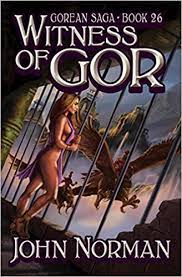
Book 26. (1 results) Witness of Gor (Individual Quote)
| Chapter # | Sentence # | Quote |
|---|---|---|
| 14 | 1328 | It is not View more quotes about simply">simply because they know us, and know us well, as the enemy to be vanquished, that they put us to their feet. |
 |
Book 26. (7 results) Witness of Gor (Context Quote)
| Chapter # | Sentence # | Quote |
|---|---|---|
| 14 | 1325 | It seemed paradoxical to me at first, of course, to discover that these men, with their great love of nature, would think nothing of keeping a cowering, cringing woman chained at their feet. |
| 14 | 1326 | Were we regarded, because of what we were, rightly, as being worthy of less consideration than the delicate petals of a tiny blossom? Did they know us that well? Was our nature so obvious to them? Did they know, too, I wondered, that we were the secret enemy? Did they understand the secret war? But did they understand, too, that we were the secret enemy who wishes to be subdued, and enslaved? Did they understand that we wished to lose the secret war, to be vanquished, totally, that we wished, conquered and humbled, to bend our necks to the collars of the victors, that we might then serve them as their helpless slaves? I had soon come to understand that these mysterious juxtapositions, these seeming paradoxes, this thing, the love of flowers, the subjugation of women, and such, is all of a piece. |
| 14 | 1327 | It is not simply because they know us, and know us well, our pettiness, our vanity, and such, that they put us to their feet. |
| 14 | 1328 | It is not simply because they know us, and know us well, as the enemy to be vanquished, that they put us to their feet. |
| 14 | 1329 | It is also, simply, in part, because of their adherence to nature, and their refusal to compromise it, that they put us to their feet, where we belong. |
| 14 | 1330 | They know that if we are not kept there we will destroy them. |
| 14 | 1331 | We despise and hate men too weak to keep us as slaves, for they then deny to us our own nature, and not only theirs to themselves. |
|
It seemed paradoxical to me at first, of course, to discover that these men, with their great love of nature, would think nothing of keeping a cowering, cringing woman chained at their feet.
Were we regarded, because of what we were, rightly, as being worthy of less consideration than the delicate petals of a tiny blossom? Did they know us that well? Was our nature so obvious to them? Did they know, too, I wondered, that we were the secret enemy? Did they understand the secret war? But did they understand, too, that we were the secret enemy who wishes to be subdued, and enslaved? Did they understand that we wished to lose the secret war, to be vanquished, totally, that we wished, conquered and humbled, to bend our necks to the collars of the victors, that we might then serve them as their helpless slaves? I had soon come to understand that these mysterious juxtapositions, these seeming paradoxes, this thing, the love of flowers, the subjugation of women, and such, is all of a piece.
It is not simply because they know us, and know us well, our pettiness, our vanity, and such, that they put us to their feet.
It is not simply because they know us, and know us well, as the enemy to be vanquished, that they put us to their feet.
It is also, simply, in part, because of their adherence to nature, and their refusal to compromise it, that they put us to their feet, where we belong.
They know that if we are not kept there we will destroy them.
We despise and hate men too weak to keep us as slaves, for they then deny to us our own nature, and not only theirs to themselves.
- (Witness of Gor)